Tuesday, March 13, 2012

Chicken Educational Unit

My first grader's school is going to do a unit on chicks, and are excited to have me show them how chicks hatch. They're going to borrow my incubator and have the whole process at school. It's going to be a lesson in patience for me, since I won't be able to go in and candle a million times, but that has to be good for me, right?

Here's an email I sent to her teacher with a lot of helpful links and information. Hopefully the links stay alive. If one dies, please let me know so I can remove it.


It's possible to "candle" an egg and see the chick's development. Here's a link where someone took a picture each day so you can see the progression: http://www.backyardchickens.com/t/261876/chicks-are-here-egg-candling-pics-progression-though-incubation

It's also possible to see the chick moving around when candling. Here's a video I took of one of my chicks moving around at 10 days incubation: http://www.youtube.com/watch?v=qlrhtLc2_6Q  (if you do a youtube search for "candling Chicken Eggs", you'll find many more videos, and probably of better quality.

This video won an award from Nikon. It shows a chicken embryo at 72 hours development. The scientist injects a bit of black dye and you see the circulatory system spread the dye through the embryo, as well as through the yolk. If you watch closely, you can also see it's heart beating and moving the blood around. http://www.nikoninstruments.com/News/US-News/Chick-Embryo-Takes-Top-Prize-in-First-Year-of-Nikon-Small-World-in-Motion-Competition

Here is a time lapse video of a chick hatching. From "pip" (when the first tiny hole appears) to hatch can be anywhere from 2-30 hours (in my experience, it's in the 12-20 hour range).  http://www.youtube.com/watch?v=tof5b1Qs_OE&feature=related

(here's some fertilization information that may be dicey to share with the kids)  Most eggs that you buy from the grocery store are not fertile, which means that a chick will never develop from them. For a chick to develop, there has to be a rooster around the hens. In commercial egg farms, they don't keep a rooster around. Much like a human, a chicken will produce an egg whether or not a man (or rooster) is around. A hen can produce fertile weeks up to 3 weeks after a rooster has been taken out of the pen. Did you know that you can tell the difference between a fertile egg and a non-fertile egg? The difference is subtle, but there.

A non fertile egg will have a tiny white spot on it.  A fertile egg will have a larger spot, with a bullseye around it.  Examples: http://www.ca.uky.edu/smallflocks/_images/Fertile_vs_Infertile_egg.png

Many people think that a blood spot in the egg means that it is fertile. This is not true- it just means that the chicken was startled or had a slight injury when that egg was forming. They're perfectly safe to eat.

Even if an egg is fertile, it will not start developing unless it's incubated. If the egg farmer collects all eggs daily, and keeps them below 99 degrees, no chicks will form. If a hen goes "broody" (i.e. she sits in the nest all day and tries to sit on the eggs all day), she will steal others' eggs and sit on them, hoping to incubate them. If she does that for several days, those eggs will show development. I've also heard of eggs starting to develop if they're left in the hot hot (think 100 degree days) sun for days on end.

Fertile eggs can sit for several days before either being placed under a broody hen or into an incubator. I've heard that eggs can be up to 3 weeks old and still develop a chick. Fresh eggs do have a better rate of hatch though.

Many people will actually order "hatching eggs" from people in other places and have them shipped to them. Viability tends to go down with shipped eggs because the jostling can damage the eggs. I actually had eggs shipped to me over 2,000 miles during the Christmas rush in December, and still had 5/7 eggs hatch (the 6th completely developed, but died before hatch).

A grown up girl chicken is called a hen. A grown up boy chicken is called a rooster. Under a year of age, a boy chicken is called a cockerel. A girl chicken that hasn't started laying eggs yet is called a pullet.

Some classes will create a hatch countdown chart. There's lots of fun math activities that can be done to figure out how many days are left, how many have gone by, etc.

Here's a couple songs you can also teach the kids to sing about chickens.

Peep, Peep, Peep(Jingle Bells)by Lisa Curtis
Peep, peep, peep!
Peep, peep, peep!
We are hatching chicks/ducks!
We have waited for so long
And now they have arrived!
Peep, peep, peep!
Peep, peep, peep!
We are hatching chicks/ducks!
Yellow, fluffy, and so cute
We have baby chicks/ducks!
I'm a Little Chicken(I'm a Little Teapot)
by Susan Peters
I'm a little chicken,Ready to hatch,Pecking at my shell,Scratch, scratch, scratch.When I crack it open, out I'll leap,Fluff up my feathers and cheep, cheep, cheep!

Saturday, March 10, 2012

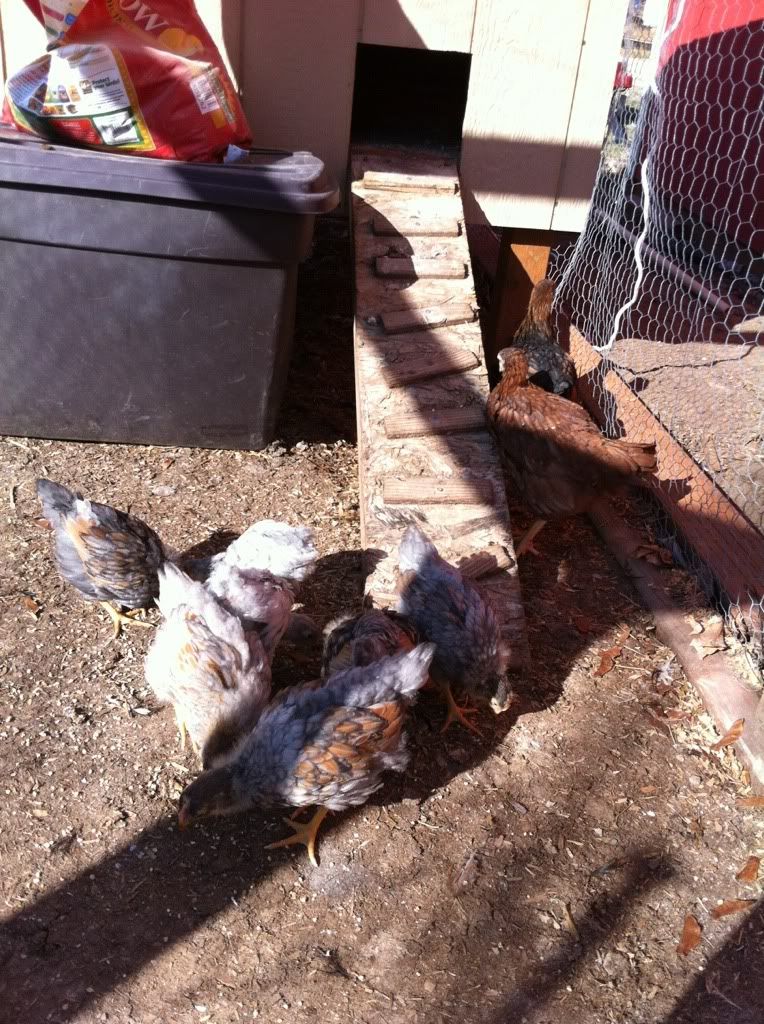
Moved Everyone outside

Yesterday, I finally had enough, and I brought the seven younger chicks outside. The dust. The smell. The Smell. Did I mention THE SMELL?!

I was a little worried about how the bigger chicks would react to the younger ones. Although they're only 4 weeks older, they're double the size of the younger ones.  They seemed alarmed by all the smaller ones running around, and so far have been fine.

Today, the weather has been beautiful. I decided all of the babies should experience outside for the first time. I opened up the doors. After an hour, they still hadn't gone outside. So, I forcibly moved them outside. Once outside, they seemed to be pretty pleased to be out there.

As dusk falls, I will probably have to help them go back inside, and seal everything up again so it doesn't get too cold.

Thursday, February 23, 2012

Updated Photos

Zuli
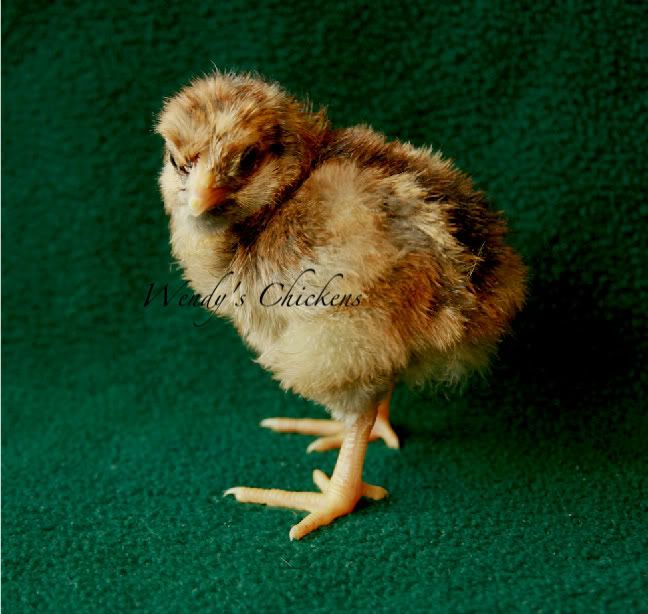
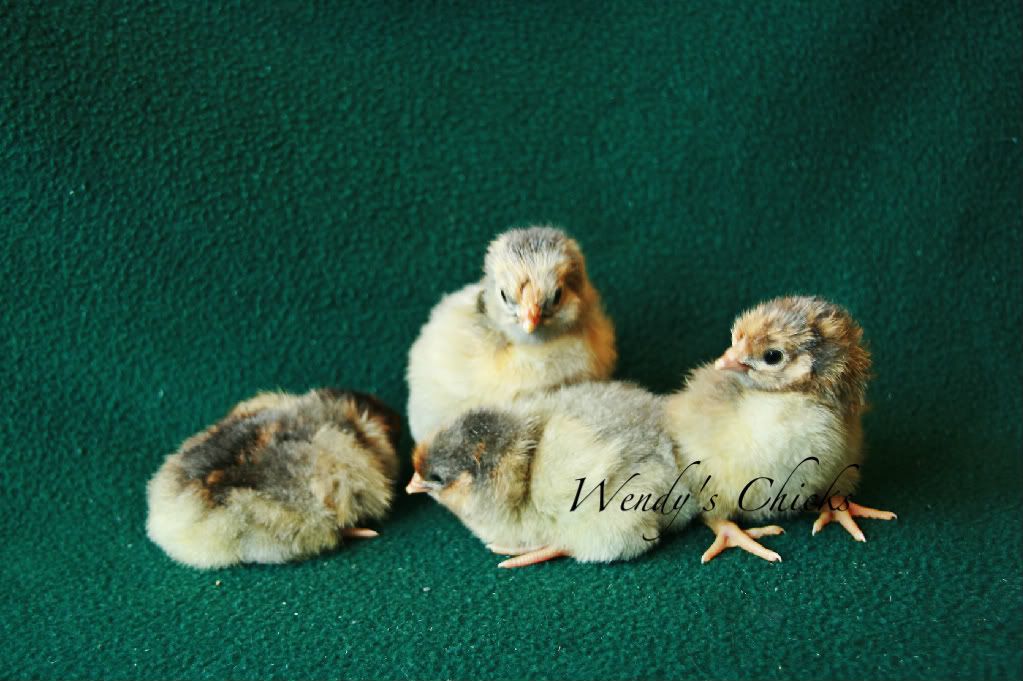
The chicks are now 2.5 weeks old. I can only distinguish Cobalt (the one with the dark red head) and Zuli (the one I helped hatch). The other three all still look very similar to me. I think one of the triplets may be a boy- its' comb seems more distinguishable than the others. I'm sure there's at least 2-3 boys, but I can't tell.
The whole group- Cobalt is second from the left, Zuli is second from the right

I think the one spreading its' wings would be considered a "splash" pattern.


I also have updated pictures of the Lavender Ameraucanas. Unnamed chick is now named Iris, and he (?) is still significantly bigger than the other one.
Iris on left

Friday, February 10, 2012

Velociraptors go outside!

My house was starting to smell like a barn. Even though I have a terrible sense of smell, I could tell. I was cleaning both chick brooders out every day, but it was just getting bad. I know that the vast majority of it was the bigger chicks. Plus, even though I bought the biggest rubbermaid tote I could find, and that I could actually fit in my house, I felt like they were outgrowing it.

The other day, we were discussing chicken coops in winter, and whether or not to add supplemental heat. For my adult chickens, I add supplemental light in the form of a 100 or 120 watt bulb. I figure that it adds a bit of heat, because the water rarely freezes in the henhouse. I keep the water in the henhouse during the winter as well. We have the walls of our henhouse insulated, using those styrofoam panels that are commonly used in garage doors sandwiched between thin boards (otherwise, the chickens peck at it).

It got me thinking though- if I were to use my brooder lamp with a better heating bulb, and had it so it wasn't so far from the floor of the henhouse, why not put my velociraptors out there? I also have one of those indoor/outdoor thermometer sets, so I can monitor the temp, and if it gets too cold, I can bring them in.  When chicks first hatch, they need 95-100 F degree temps. That can be reduced by 5 degrees per week until they're feathered in, which happens around 5 weeks or so. Since they are more or less totally feathered in now, I think they can tolerate cooler temps.

So, I just took all five velociraptors outside. They have a much bigger space to play in, and I have high hopes that this is going to work out extremely well.

I will admit I really wish I have a camera out there to watch them, but I don't want to invest that kind of money.  I'll keep you posted.


Wednesday, February 8, 2012

Lapis Lazuli

Lapis Lazuli (Zuli for short) has been really doing well. She (hope springs eternal!) is still smaller than the others, but seems very strong, and is eating and drinking with the group. I am very optimistic that she will grow up to live a good, long life.

She's still not totally fluffed out, but I did take her picture today.


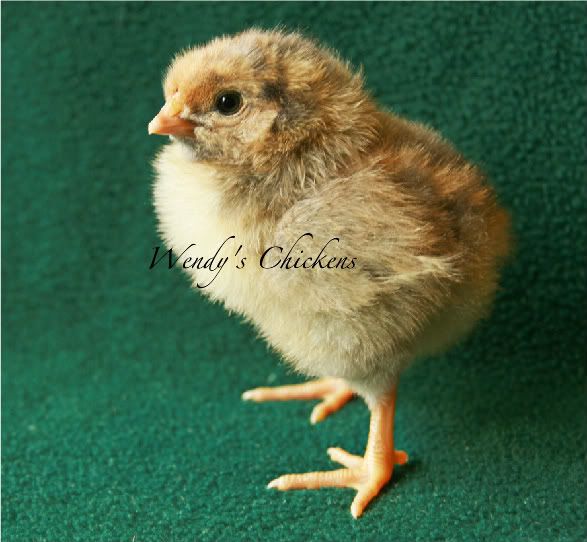
I also took a picture of one of the other blue laced red wyandottes. Unfortunately, I'm having a very tough time telling them apart, so I have no idea which chick it is.


In other news, I also took pictures of the two Lavender Ameraucanas. One is still unnamed, so we'd love to hear suggestions.


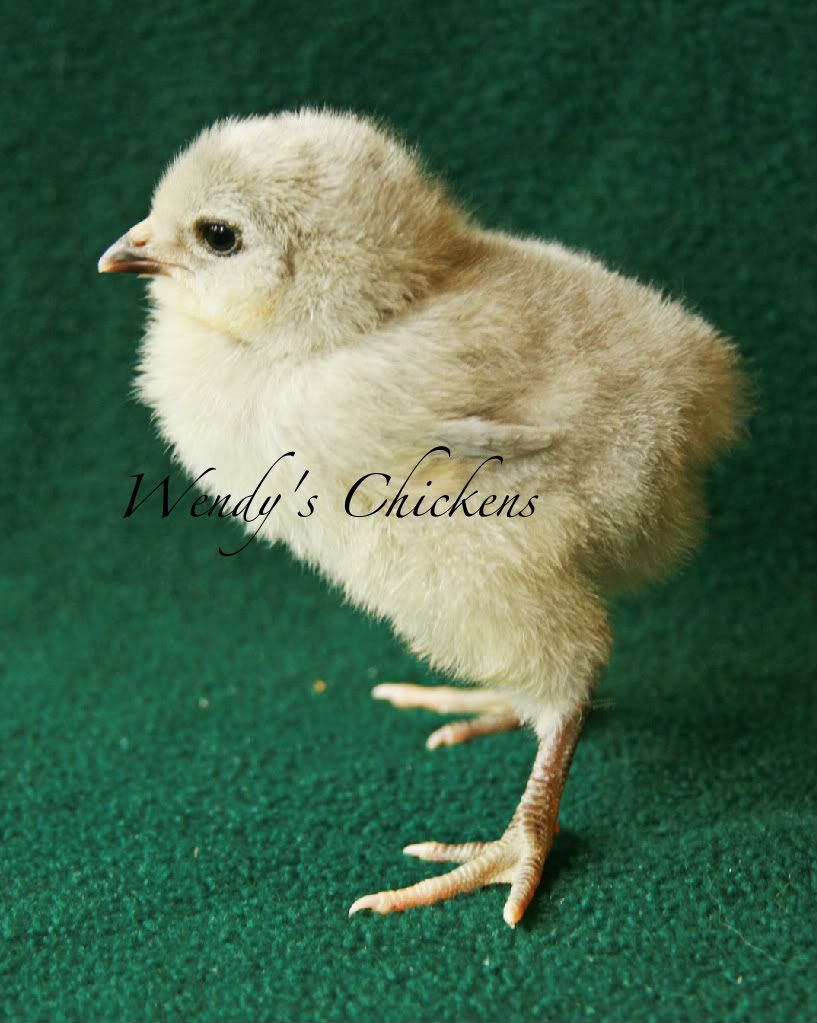
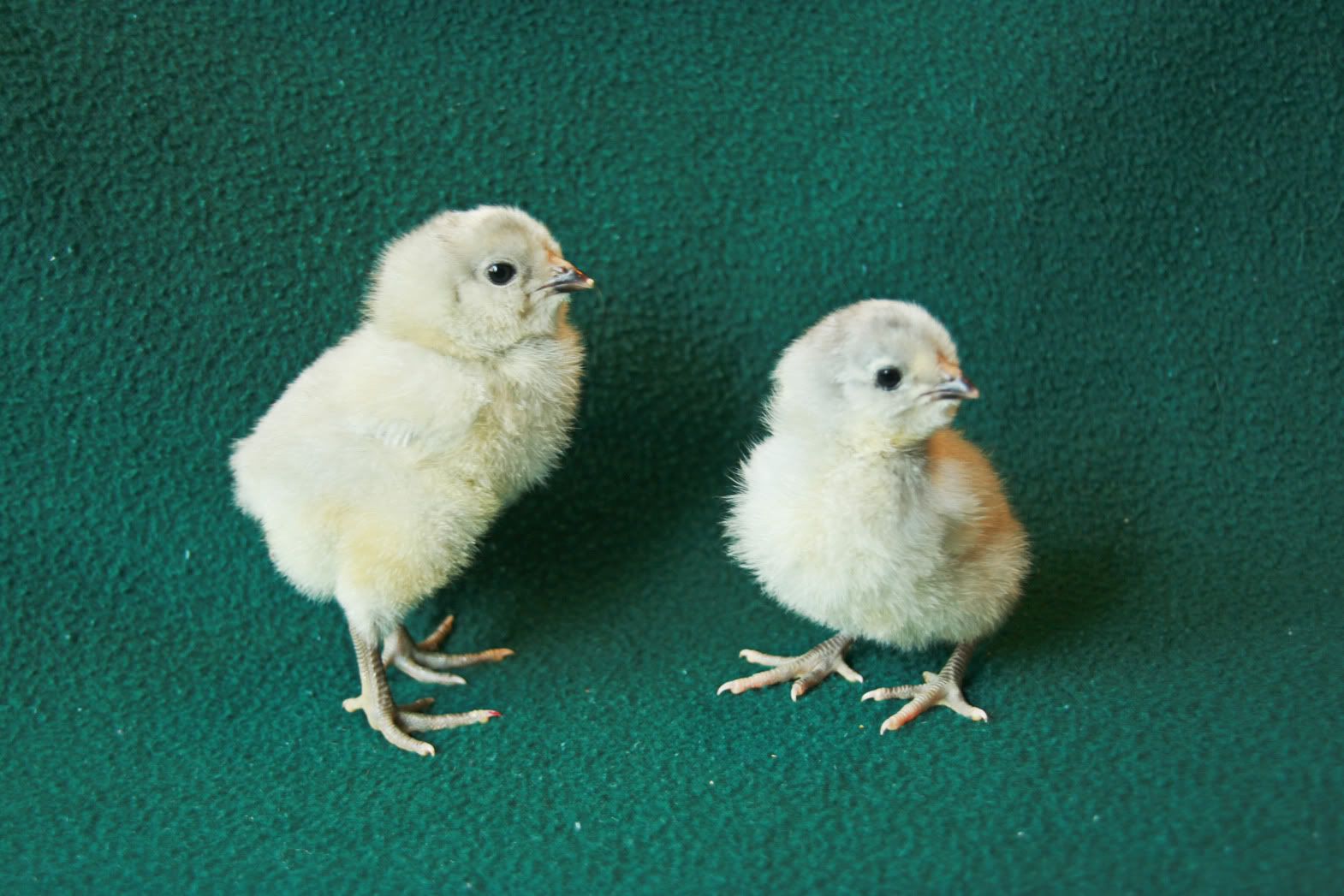
This is Lucy. My 6 year old named her.


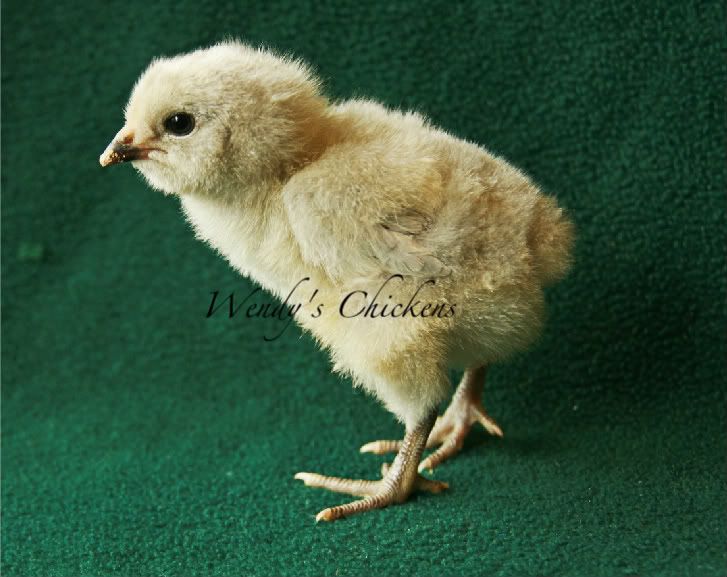
This is our unnamed chick.

Tuesday, February 7, 2012

Hatching of the Blue Laced Red Wyandottes

Well, my hatch of the Blue Laced Red Wyandottes is complete, thank goodness. I had another "exciting" hatch, which I'm starting to hate.

I started the eggs at 8pm on a Sunday, so figured I'd see my first pips Sunday morning, 3 weeks later. I bought 7 eggs. One never developed at all, and the other died at 7 days along.

On Sunday morning, by 10am, I had pips in 3 eggs. One was pipped at the narrow end (again? Seriously?), one was perfectly normal, and the last had pipped almost into the floor of the incubator.

By dinnertime, all five eggs had pipped, but the holes were tiny.

At 11pm, it didn't seem like any progress was being made, so I went to bed, convinced they'd hatch while I was asleep. At 12:30, I went to check on them, and sure enough, an egg had hatched (the normally pipped one). I put it in the brooder, and went back to bed. A little after 1am, I checked again, and a second egg had hatched (the one that pipped at the narrow end). Seriously?! It hadn't done anything a half hour earlier! Put it in the brooder and went back to bed.

At 5am, my alarm went off to go to kickboxing. I was too tired to go after my restless night, so I checked the eggs (no progress) and went back to sleep. 

At 6:30, my husband was getting ready to leave for work and asked me when I was going to put the hatchling in the brooder. WHAT?! Again?!  Sure enough, I'd missed the hatching of my third chick. The third chick to hatch had been the last to pip- Indigo, in the darkest egg.


The fourth chick was conscientious enough to hatch while the kids were getting ready for school, so we all got to see it come out. Finally!


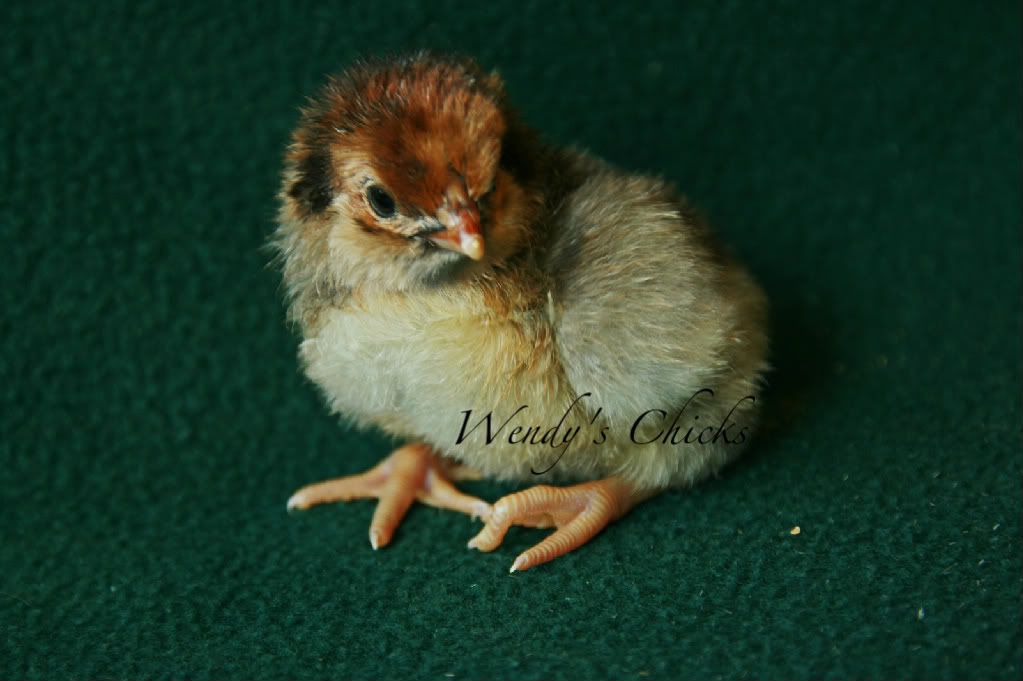
The chick of this group who is on the far left had the cutest red head, so I took an individual shot of it:

Aren't they just adorable?!
At this point, I was starting to get worried about the final egg- Beryl. If you see the picture of the eggs, you'll notice it was smaller than the rest, and I was worried that could cause a problem. Beryl had pipped near the floor of the incubator, so I was worried that would make zipping tougher. It had been pipped for 24 hours, and no progress whatsoever had been made.

I tried to sit on my hands and do nothing but be patient. Of course, doing nothing wasn't going to last long for me.


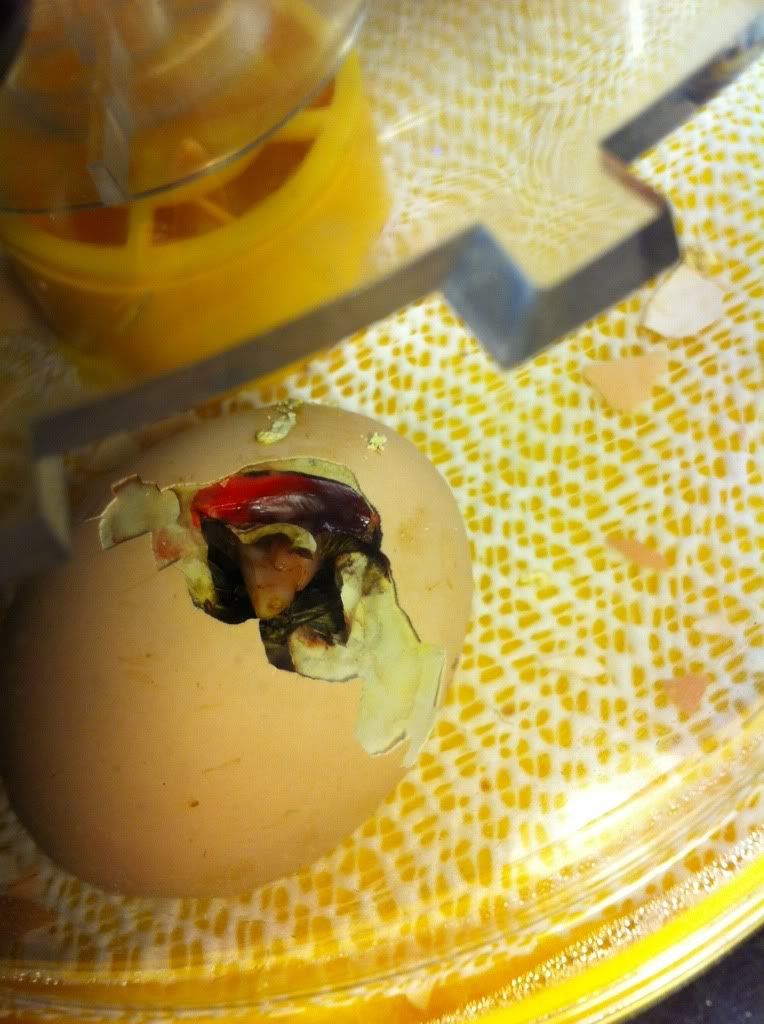
About 26 hours after pip, I peeled back some of the shell. Membrane seemed ok, so I started to cut that away, but a drop of blood emerged, so I immediately stopped and put egg back in incubator.

Four hours later, I thought I'd try cutting the membrane again, as she hadn't made any progress at all.  Again, got a drop of blood, so I stopped and put her back in the incubator and vowed not to touch her again.

At 6pm, 34 or so hours after pip, we went to dinner. Came home and found she'd tried to progress, but found another vein, and had bled some more. Yikes!

At this point, I was truly panicked. I felt like she was weak both from loss of blood and from extended time in egg.

I finally ended up hatching her out. I did this on the web cam, with over 40 people watching. I was really nervous I was going to kill her, but felt like this was her best chance.  Luckily I only encountered a couple of tiny specks of blood. She still had a bit of yolk to absorb, but it was quite tiny, less than a drop. I left her in the incubator overnight, making sure she wasn't laying on her side, but on her belly.

The next morning, she seemed to be doing quite well. Her feathers hadn't fluffed up like the others, and she seemed smaller (maybe the small egg? Maybe the not fluffy? Maybe the extra day of puffing out the others had?). I put her in the brooder with the others, and she's slowly puffing out, and seems to be walking and moving just fine. I think she appears to be perfectly healthy.  Her egg name was Beryl, but my webcam viewers did not care for that name at all. Many name suggestions were given, and I ended up going with Lapis Lazuli, or Zuli for short.

Once she really fluffs out, I'll take a cute picture of her to post.


Impulse buy of chickens!!

Yeah, I realize this sounds impossible, but it turns out to be absolutely possible. For me anyway.

On my chicken board, I've gotten quite chatty with people in my state. One of the ladies there had some eggs shipped to her- Lavender Ameraucanas. She posted a picture of the eggs, and I was drooling- they were such a beautiful shade of blue. I was tempted to get a chick, but thought I'd hold off.

Then, her blue eggs hatched, and the chicks' pictures were so beautiful that I decided I simply must have one. She talked me into two so that way, my odds of getting a girl were higher.  These chicks are so beautiful, all silvery and gold with blueish legs.

We named one of them Lucy. The larger one is still unnamed, so if anyone has a suggestion, I'm all ears.