Tuesday, July 31, 2012

Food and Water Improvements

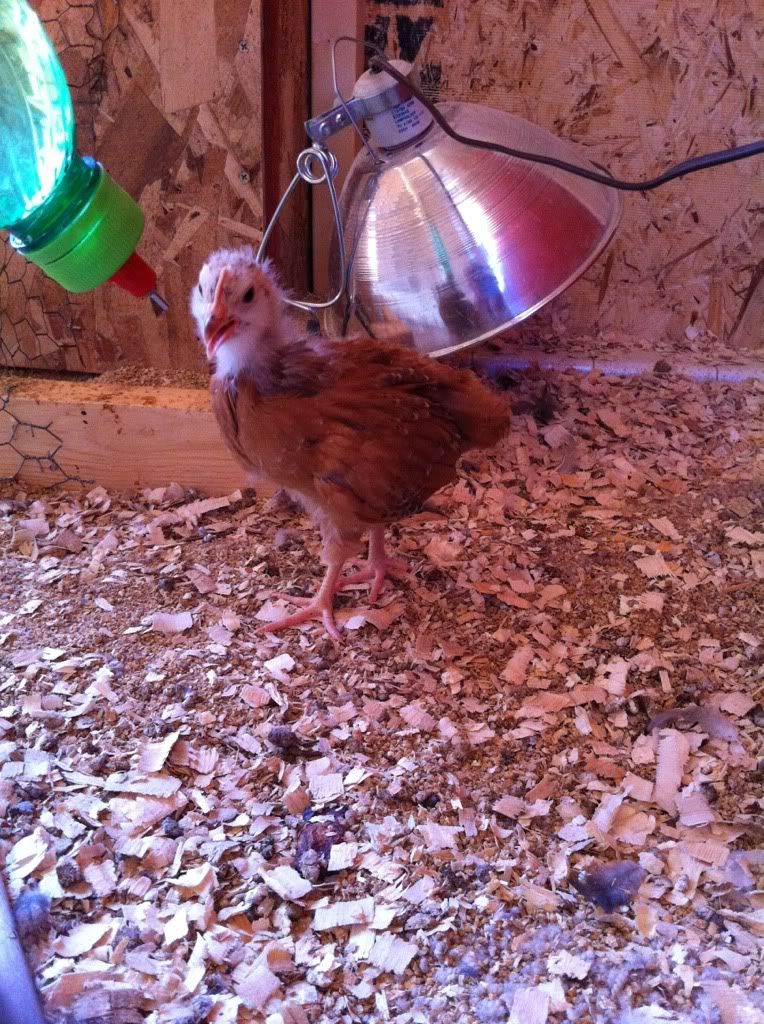
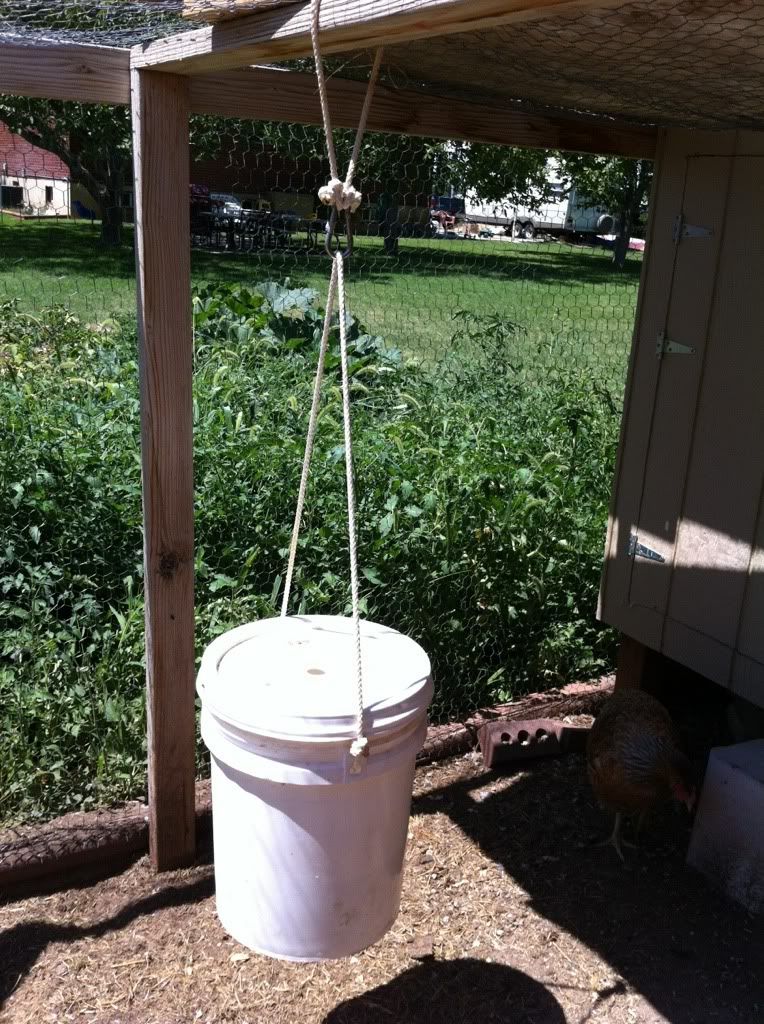
I was getting tired of how disgusting my chickens' water was getting. It seemed like it was always really dirty, even soon after I'd cleaned out the watering bucket I'd made.  I'd heard great things about watering nipple systems, so I bought a 10 pack from http://www.cconly.com/.  There was installation instructions with THIS youtube video. It was just as easy as the video showed.  I made two watering systems- one for the old coop and one for the new.  I also put a nipple in the cap of a liter soda bottle for chicks.
You'll note the small hole in the top, where I can just use a hose to fill. We also used a strong rope to attach it. We drilled holes in the bucket so to loop the rope through so that it would be very sturdy. We also used a hook in setting it up so that we could adjust the height if needed.
The new coop has the watering system inside, which hasn't been as good. I'm not sure if the nipples leak a little, or if the chickens are just messy drinkers. It's probably a combination of both. But, I had this gooey/wet shavings mess in the bottom of the henhouse. I have been meaning to move it outside, but haven't had time.
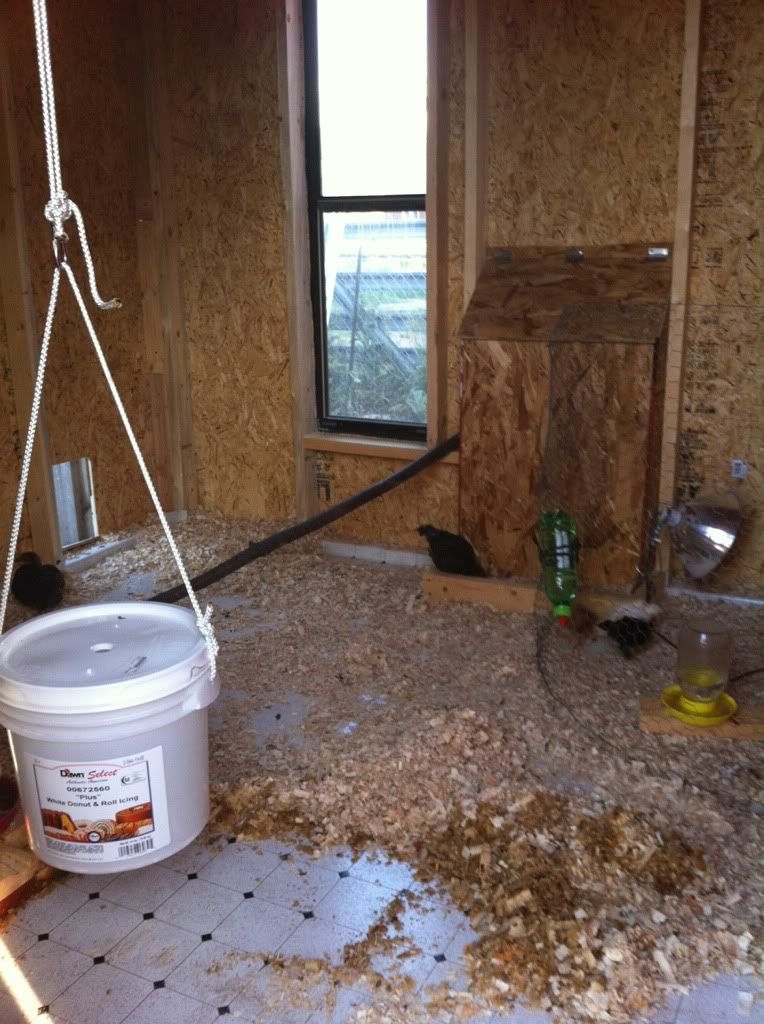


Here's a picture of the new coop, showing the new feeding system and the nipples. Note the mess on the floor.
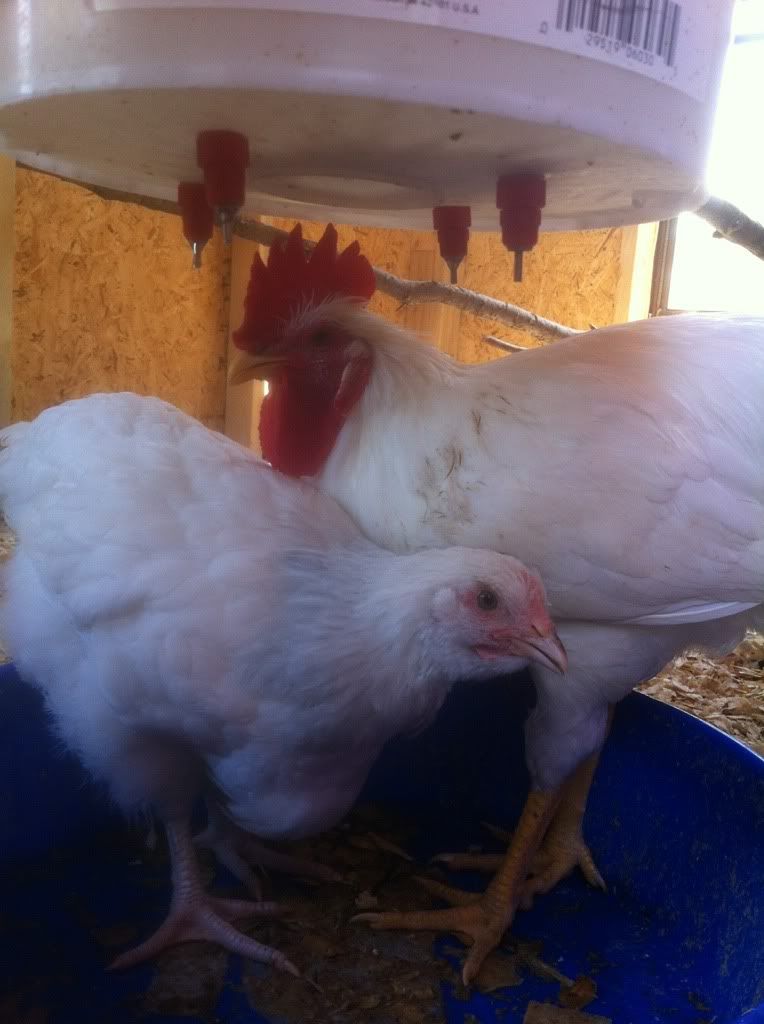


The chickens figured out how to use the nipples very, very quickly.  Best of all, it's easy to keep the water clean.


 When winter comes, I'll have to invest in a heater that will go into the bucket to keep the water from melting.


Moving on to the new feedbox.
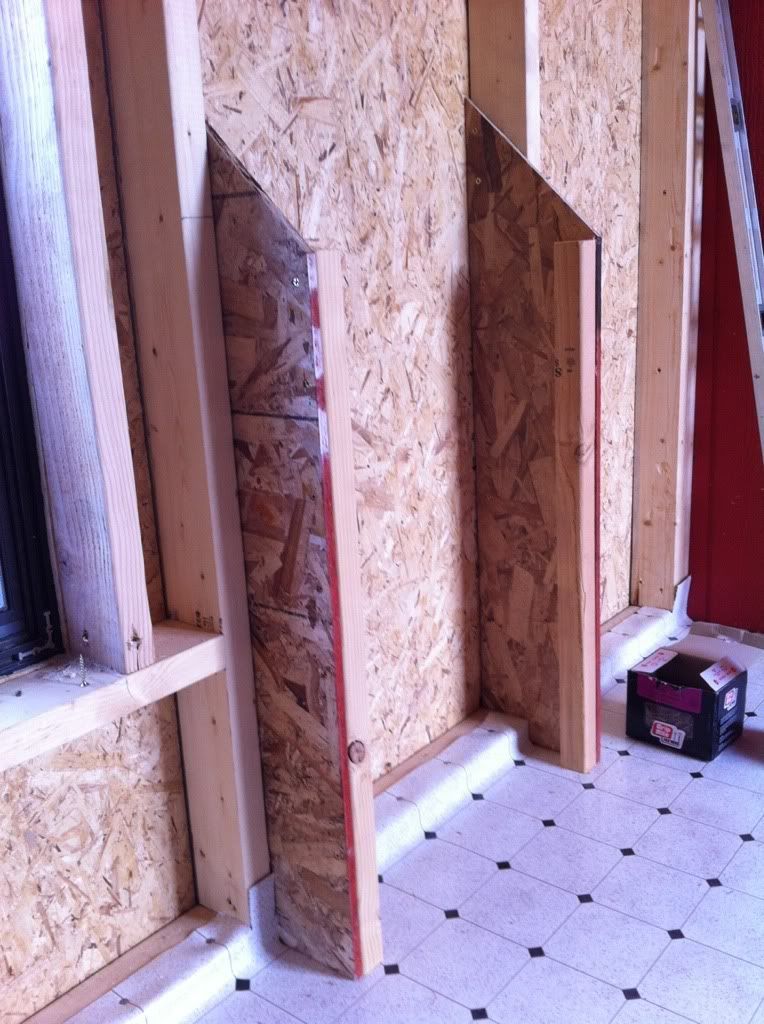


Here's after we put the sides up. I wanted it to be tall enough to hold at least 50 lbs of feed, but not so tall that putting the bags in there would be difficult for a shortie like me.
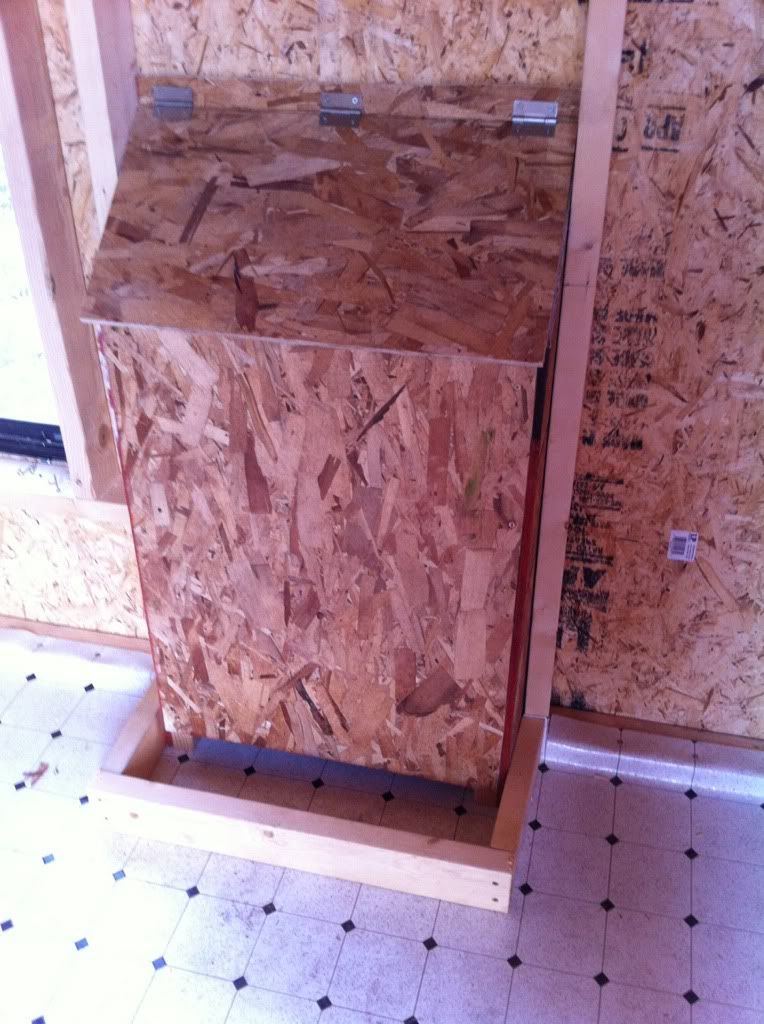

Completed box. Note that top is at an angle to discourage the birds from climbing up there and pooping all over the box and food.
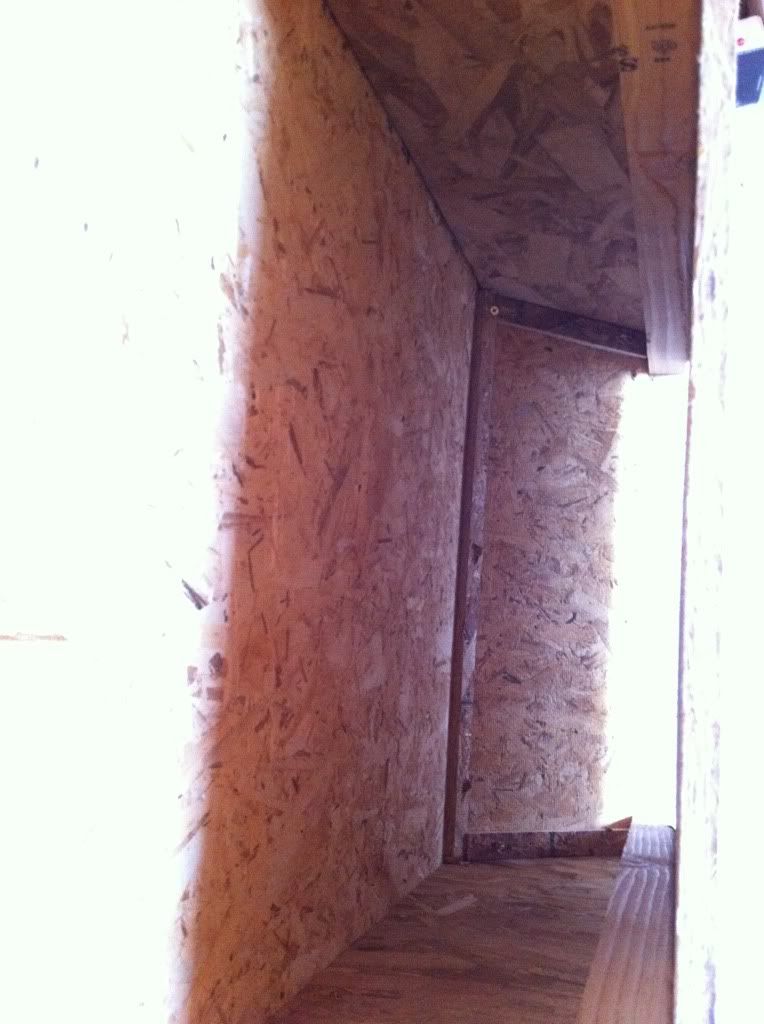

We put some wood at an angle to encourage the food to go out, and not get stuck in that back corner. This is looking from the top down.


One big problem with our feeder is waste. The chickens are still small enough that they climb inside, and then kick the food out and around. I think most of that will fix itself as they get bigger. I am considering running small wooden dowels across the feeding area to make kicking the feed out more difficult.

Sunday, July 29, 2012

Mystery

Things have been going along pretty uneventfully here. The two January chickens and the plymouth chicken are laying very well. None of the three February chickens are laying yet.  We made chicken nipple watering systems and have been thrilled with them.

We left on Thursday to go to Zion National Park for a few days. I asked a friend to look in on the chickens and collect eggs. I told her it was an easy, almost effortless job, and she wouldn't have any trouble. Famous last words.

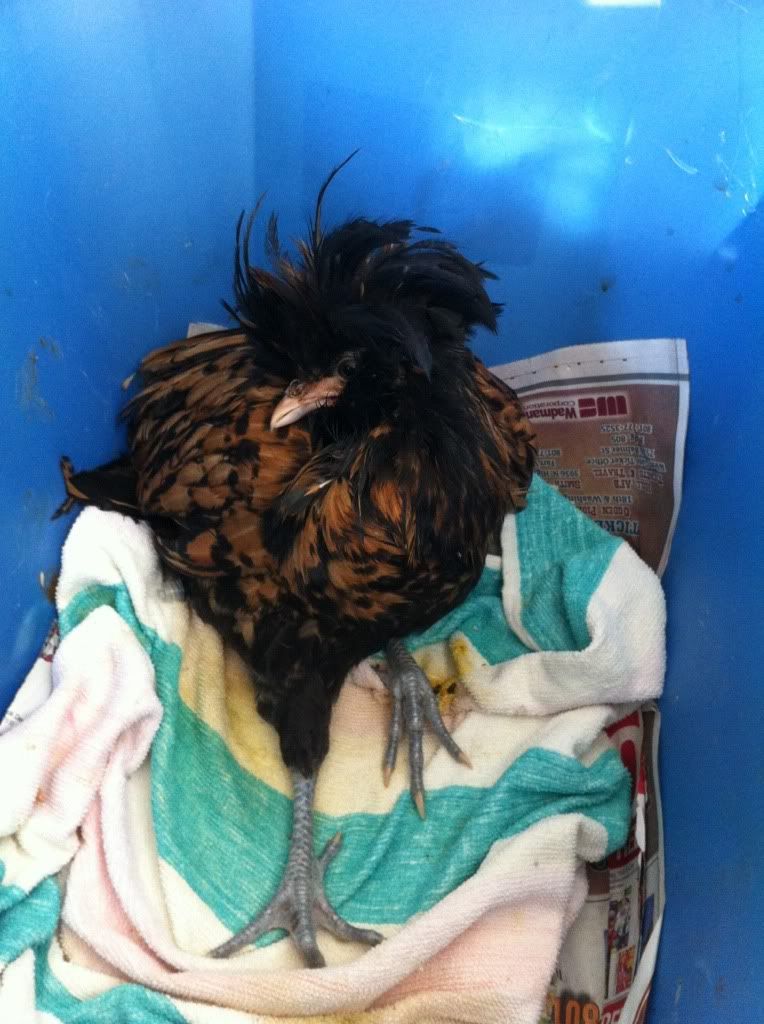
Friday, I got a panicked phone call from her. When she went to collect eggs, she discovered Thing 1 (one of the polish, and the one I've determined is a pullet) was out of the chicken enclosure. This is very bizarre- we have that thing buttoned up pretty tight, so I'm a little shocked she was out, and still have no idea how that happened.  ChickenSitter managed to capture her, and went to put her back in the henhouse. When she opened the door, she discovered Thing 2 (the other polish, and the one I've decided is a cockerel) laying on the floor, unable to move and barely breathing. I called my awesome chicken neighbor, and explained what was going on. She went over and collected Thing 2 and took him home. She fed him water by syringe every half hour until bedtime. Told him that he wasn't allowed to die on her watch. He's an obedient little guy, and lived through the night.


I got home late yesterday afternoon, and found him in pretty rough shape, despite my neighbor's nursing. I made an electrolyte solution, and fed him some poly vil sol (baby vitamins without iron).  Amazingly enough, he survived the night again, though he still couldn't stand, and he held his head at a funny angle. He also wouldn't eat.


I was in a panic. I figure it was one of three things:

1- He had been injured somehow, whether by the other chickens or by some ()*^*(&%^ who realized we were out of town, and in the fracas, Thing 1 escaped.

2- He had some VERY TERRIBLE DISEASE, and he, along with the rest of my flock, would be dead shortly.

3- He had wry neck, which can be the result of a vitamin deficiency or poor genetics that make vitamin absorption difficult.


A chicken friend of mine came over, and gave him an injection of dex something or other that is a mild steroid and pain reliever. She also gave him an injection of fluids to help with the dehydration.

A few hours later, he is actually walking around! I don't think he's out of the woods yet, but he seems to be doing better. I gave him some food and he actually ate it. He's also clucking at me. He's recovered enough that he keeps trying to jump out of the little box my neighbor brought him in, so I got out my chick brooder.

I'm supposed to give him another dose of the dex tomorrow, and even though I got clear instructions, I am a little nervous. Here's hoping it goes well.

Tuesday, July 10, 2012

Change in Attitude

I've always been very tender hearted towards animals, even bugs. I won't kill a spider unless it's venomous because I figure it has a right to live (and it'll kill mosquitoes).

However, since I've gotten chickens, I've noticed that my attitude towards predators has definitely shifted. Before, if I saw raccoon or skunk roadkill, I'd be really sad for it.

After my first batch of chickens were killed, I saw a dead raccoon a few days later, and I found myself a little bit happy, mixed with the sad.

That's not to say I go aiming. In fact, I had to slam on my brakes to avoid hitting a raccoon a week ago.

Last week, a neighbor mentioned they'd found a skunk in their back yard. I was really worried because we're in the process of building a much bigger enclosure. Because of that, there's no top. The fence is a little over 5' tall, but nothing overhead. I've ordered poultry netting, but it's not here yet.

So, I've been so worried since I KNOW there's been a skunk within 1000 yards of my chickens.

This morning, I drove past a dead skunk in the road, very close to that neighbor's house. I breathed a sigh of relief, knowing that was probably the intruder.

I'll continue to worry until the netting arrives though.

Tuesday, July 3, 2012

Shufflin'

After all of my hatches for the schools, I was up to a total of 24 chickens.  Then, my neighbor gave me my gift chicken back. Bow is a Rhode Island Red that she got from the feed store last spring. She turned out to be a mean girl, and was particularly vicious to my neighbor's silver laced wyandottes (SLW). Since my SLW was the queen, J asked me if Bow could come to our coop for a while and get taught a lesson. My girls immediately schooled her and they all got along well. So, J gave her to me. Bow was the only hen to survive the critter attack last November, so I gave her back to the neighbor. Evidently she continued her mean girl ways, so about 6 weeks ago, she came back to our coop. So, up to 25 chickens.

Unfortunately, she was absolutely awful to my new girls, and they were younger and smaller, and didn't try to beat her down, so began a reign of terror.

One of the preschool lavender ameraucanas was definitely a boy, and starting to get a bit agressive, so I sold him.  I decided I couldn't handle Bow being such a meanie anymore, so I gave her back to the neighbor.  I'd promised my brother in law/sister in law a lavender ameraucana from the preschool hatch, and a blrw (blue laced red wyandotte) from the first grade hatch, so I gave those to them a couple days ago.

When it came to blue laced red wyandottes, I really wanted a true blue one. I have a lovely splash. Out of the seven that I hatched in May, I could tell that all 7 were going to be black, which I think pretty much looks the same as a GLW (golden laced wyandotte), so I decided to keep Fred, the last to hatch of the bunch and sell the other five. Found a buyer last week.

So, I was down to 17.  Then I went to the feed store.

Ooooh, that feed store. They always get me in trouble. I had to get a little speckled sussex pullet from them in early May because she was so pretty, and she was the exact same age as the BLRW that I had just hatched. Whoops.

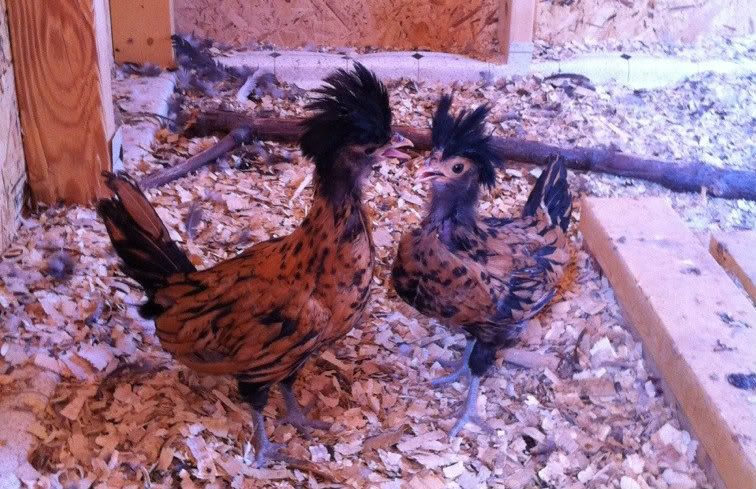
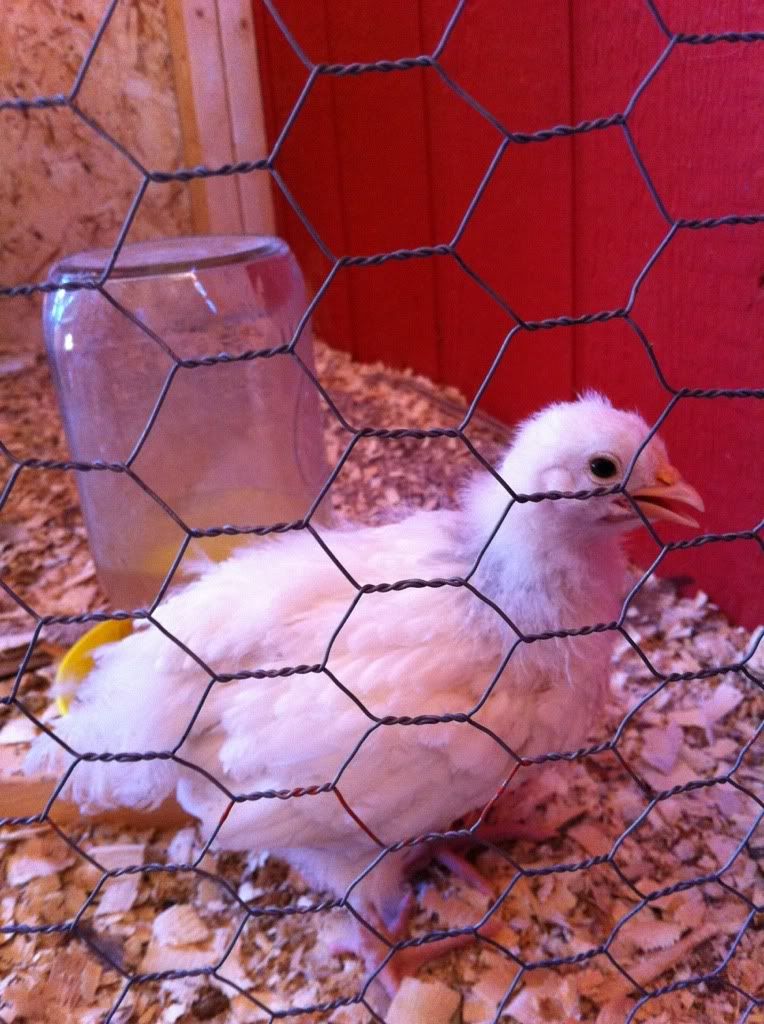
So, I was at the feed store, and the employee knows me by now (which the kids think is HILARIOUS). She sees me, and asks if I'd be possibly interested in a couple of polish chicks she has. They're the same age as my BLRW and speckled sussex. Unfortunately, they've been really picked on by the other chicks, and look really rag tag.  They're also straight run, so a big question mark on gender.

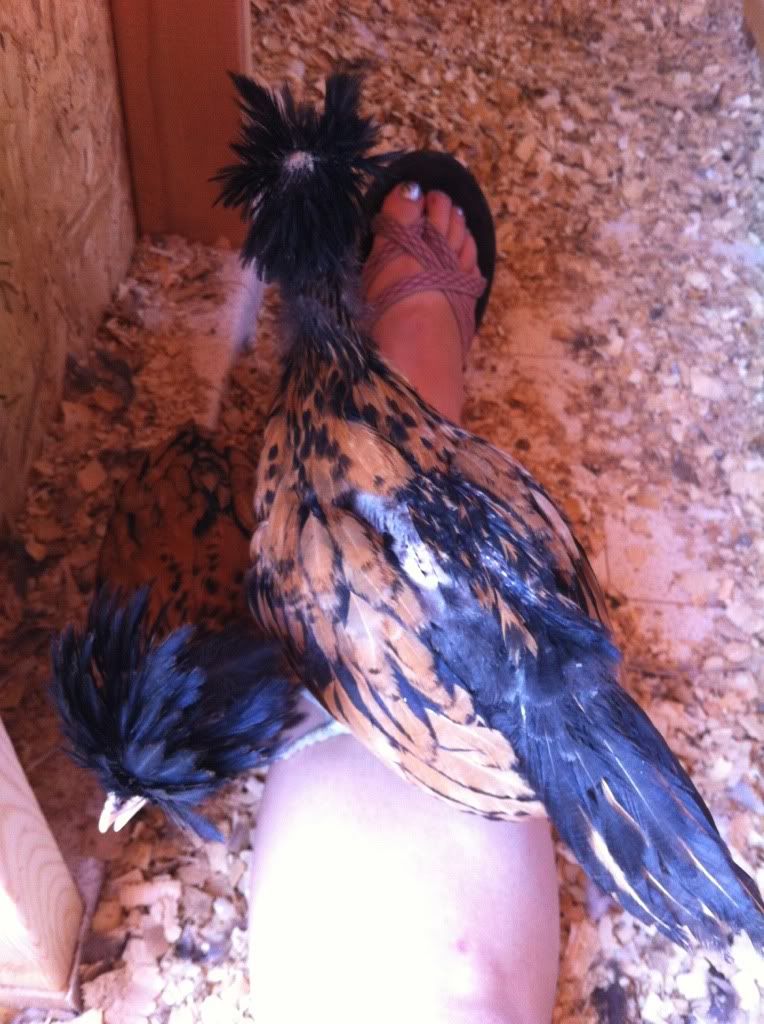
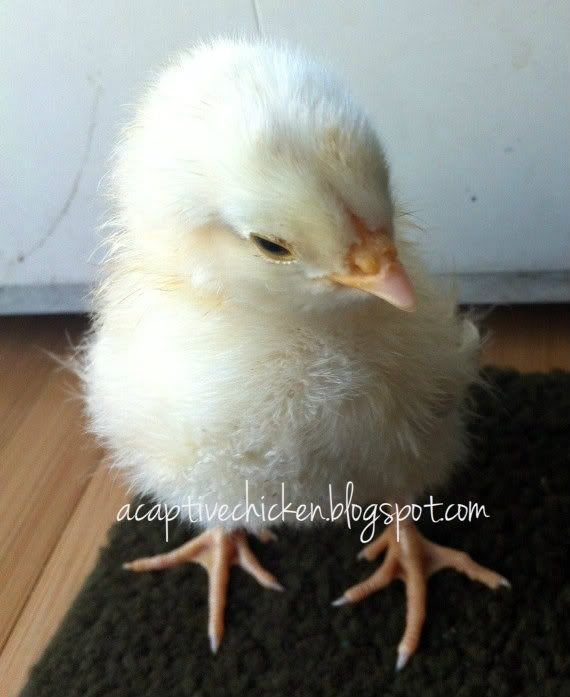
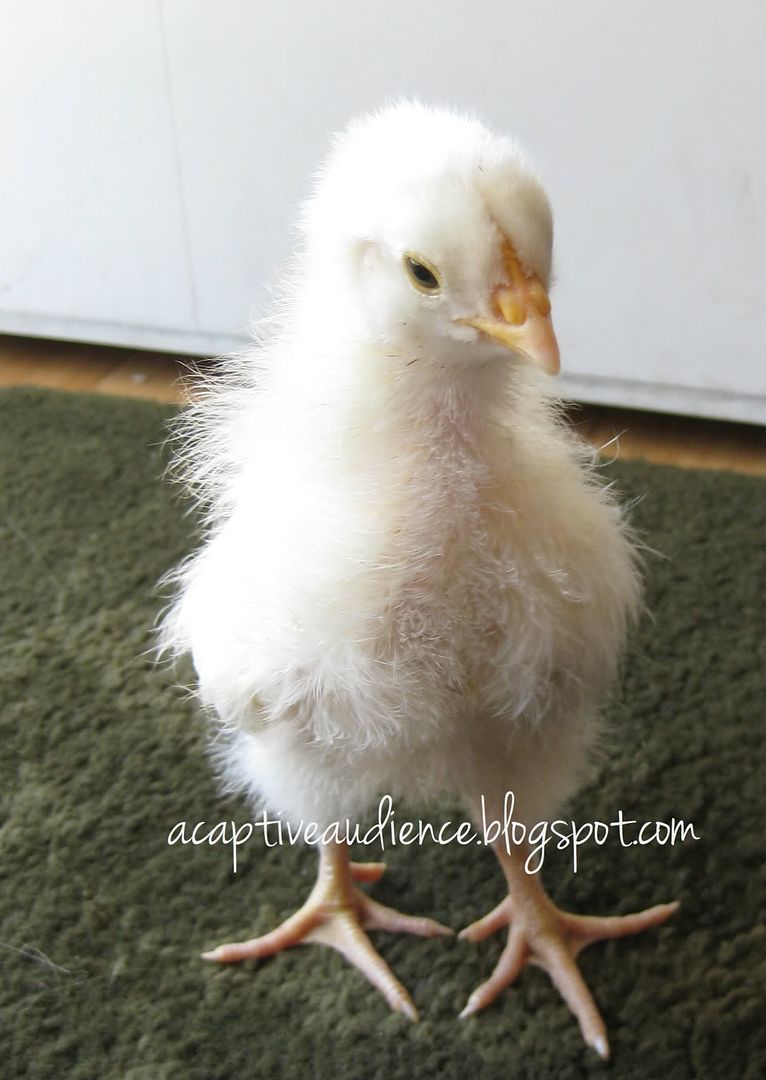
Meet Thing One and Thing Two


The feed store had done the best they could to get them healed, even employees taking them home to nurse them back to health.  At this point, they still have a couple of bald patches, but they are getting better.


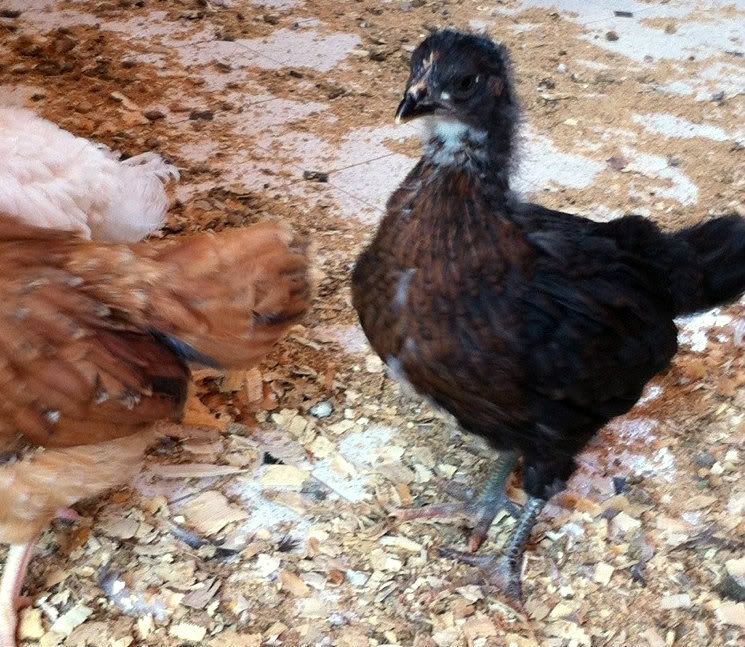
So, at this point, I have 19 chickens. I have my two roosters chosen- a White Legbar and a Black Copper Marans.  If any more boys pop up, they'll get sold.  I suspect both of the polish chickens are pullets (wouldn't that be AWESOME? I got an amazing bargain on them). The only chicks that I'm not sure on gender are the final three hatched.


 Emily's comb is looking awfully big, which worries me.


I have no idea on Chloe, the Coronation Sussex.


And, no idea on Shirley, though I'm starting to lean towards pullet, which is funny because at hatch, I was saying Shirley was a cockerel.

Friday, June 15, 2012

Fixing Curled Toes

A couple weeks ago, I posted pictures of my little coronation sussex that I helped hatch. Initially, I was deeply regretful that I'd helped her out; she seemed really in rough shape at first. As she dried off though, I realized her toes were a bit curled. Many people theorize that this can be caused by a delayed hatch. So, I'm trying to console myself with the fact that if I hadn't helped her out, it would've been worse. Maybe this is true, maybe not. I plan to stick with it, and it will cause anguish in future hatches when I have another chick taking its' sweet time.

Leaving cause behind, the fact remained that Chloe had some curled toes. Not a severe case, but a noticeable case nonetheless. I've had a couple chicks have curled toes, but they usually straighten out the first 24 hours or so. Not so, with Chloe.  Here's a picture of her feet at 48 hours old.
The left was definitely worse than the right.

I used electrical tape to create a boot of sort. I cut a small piece of tape, and carefully put the foot down onto the sticky side, making sure they were in the correct alignment.  Then, I cut another piece of tape and put that over the top, again, being very careful to make sure the toes were perfectly straight and aligned the way they ought to be.
She definitely was NOT happy about it.
I kept the boot on for about 20 hours or so. I was going to be gone the rest of the next day and evening, and didn't want to keep it on when I couldn't be keeping an eye on the chick. So, I saw definite improvement. Maybe it should've been left on longer, but I felt it was better to risk not having a full recovery- I felt like the chick was slipping a bit, and at risk for developing a splayed leg.


Here's how it looked after the first boot:
Definite improvement, but again, not perfect.  After I finished my hectic weekend, I decided to tape again.  This time, I left the tape on for 3 days or so. Again, I only treated the left foot, the right I just left alone because it just didn't seem that bad.


This is a few days after the second taping, the chick is 16 or so days old.
She is trying to run away from me here, so her stance is a little odd, but this is an action shot.


(oh, and FTR, I have no idea if this chick is a cockerel or a pullet, but I like to think positively, so I refer to the chick as "she")

Wednesday, June 13, 2012

A new and improved coop

Because of my little chicken problem, my husband decided I needed a new chicken coop. He's an engineer, and great with math, so it didn't take much to see the writing on the wall. At the moment, I have 25 chickens. Not all are permanent. My plan is to sell off 6 of the 7 BLRW chicks, and 2-3 of the preschool chicks. So, I figure I'll have 15-16 permanent chickens.  Even so, 16 chickens will not comfortably fit in our current coop.

He designed a nice coop that will go on the other side of the shed. It is 8'x8'.  The run around it will be approximately 16'x20'. It will connect to the other coop, but with a small door. That way, if I do need to separate groups, it won't be hard. I'll still have my chicken tractor too, which has been extremely handy for growing up chickens- too big to be inside, too small to hang with the big girls.


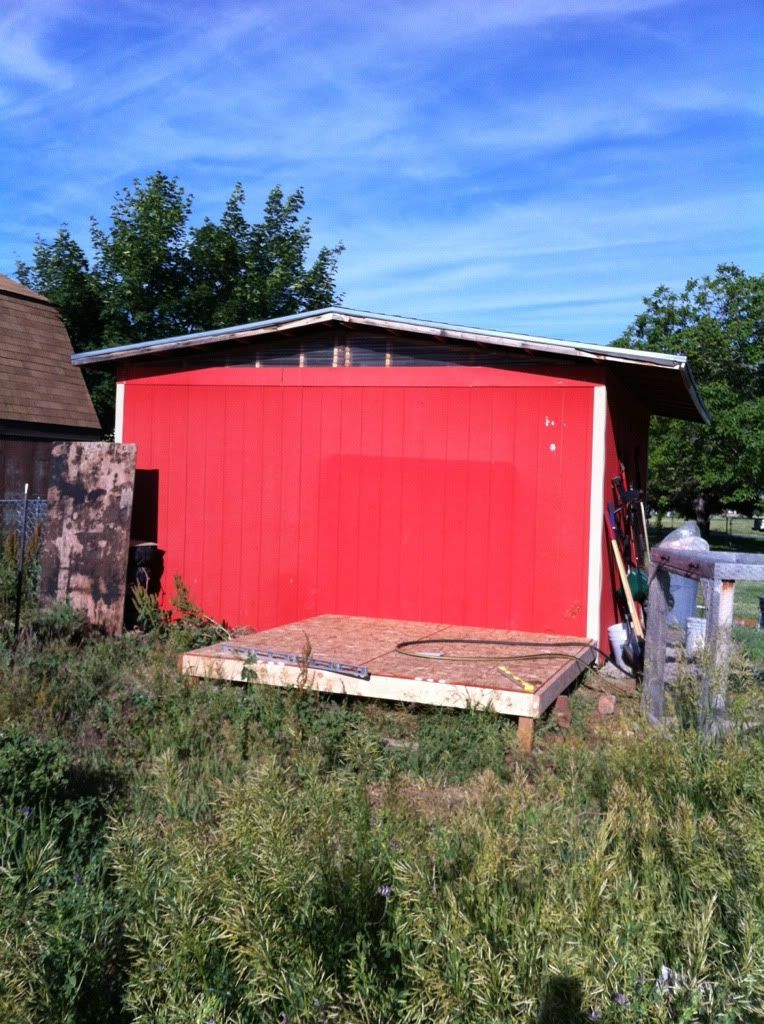
Here's the foundation of the coop.  It's butted up against our storage shed.  If I'd been there when he started, I would've asked that he raise it up a little bit so the chickens could easily go underneath- have it be maybe two feet off the ground. Because it's lower, I think I'll use chicken wire to block it off so nobody gets any funny ideas about laying eggs under there.


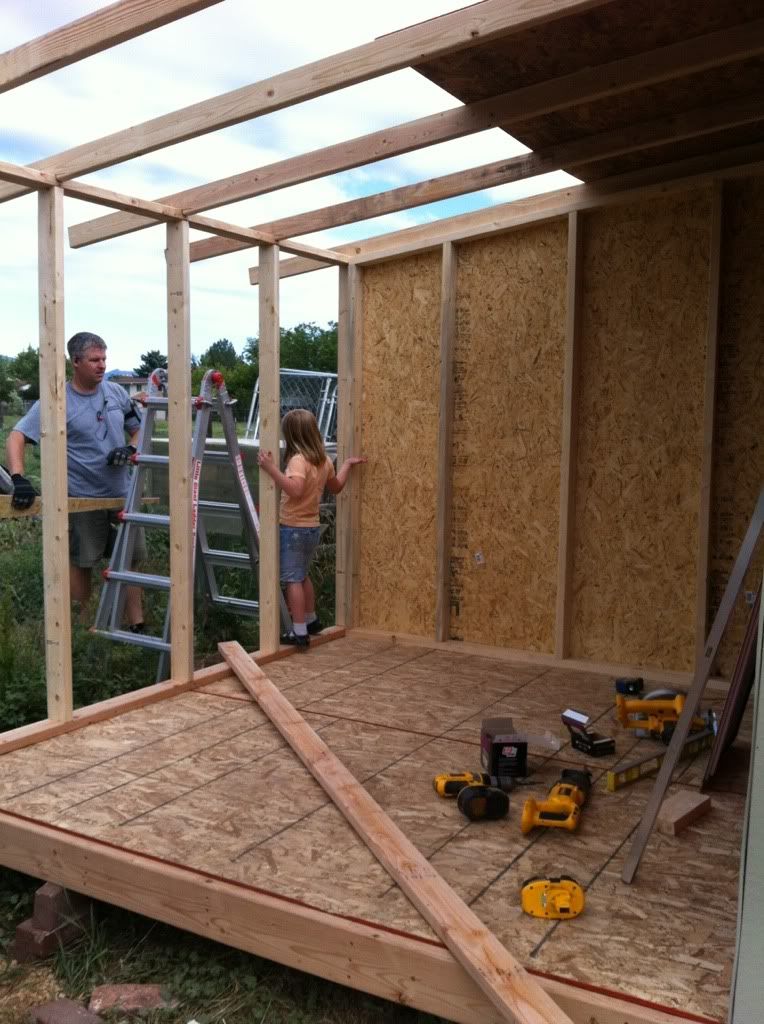
Finished framing, and starting to sheath it.


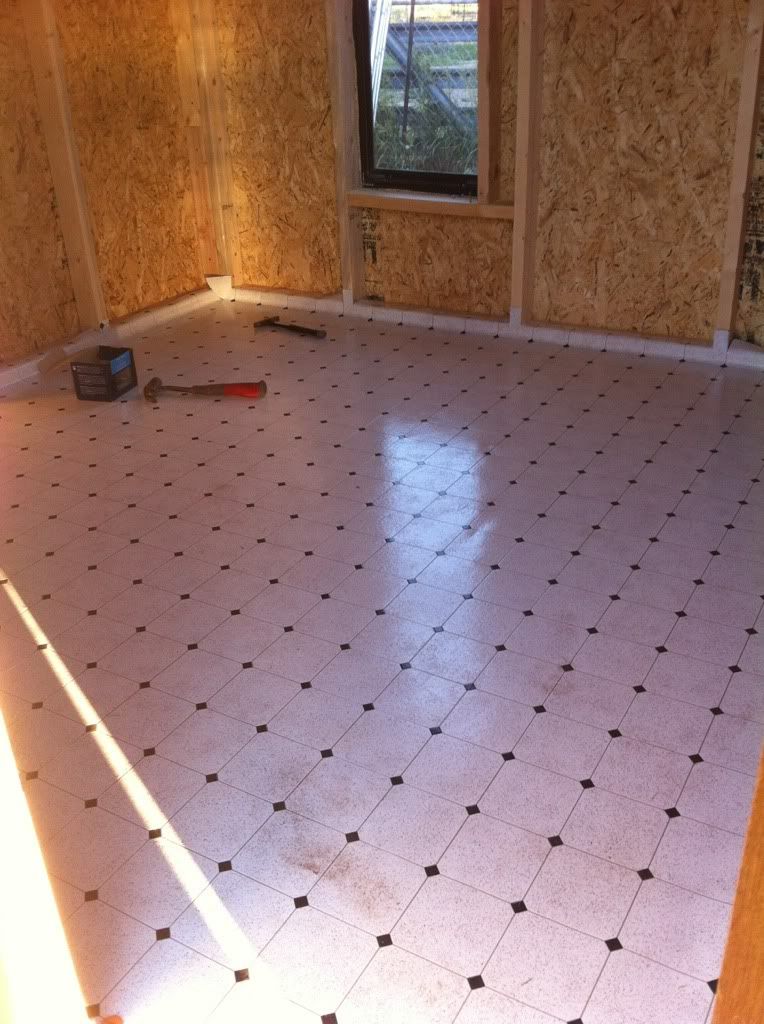
We bought some vinyl/linoleum to go on the bottom of the coop. I think it'll be easier to clean than wood, and last longer. I bought an 8x12' piece from Home Depot that cost about $50 after tax.  The window you see in the background came from Habitat For Humanity's ReStore, which is a home improvement thrift store. I got the window and a door with the necessary hardware and spent under $10. Excellent!


Here's the completed interior. In the corner next to the feed, I've stapled up some chicken wire, making a "time out" corner for smaller/injured/new birds so that they can see everyone, but aren't in any danger of getting beat up by the bigger birds.


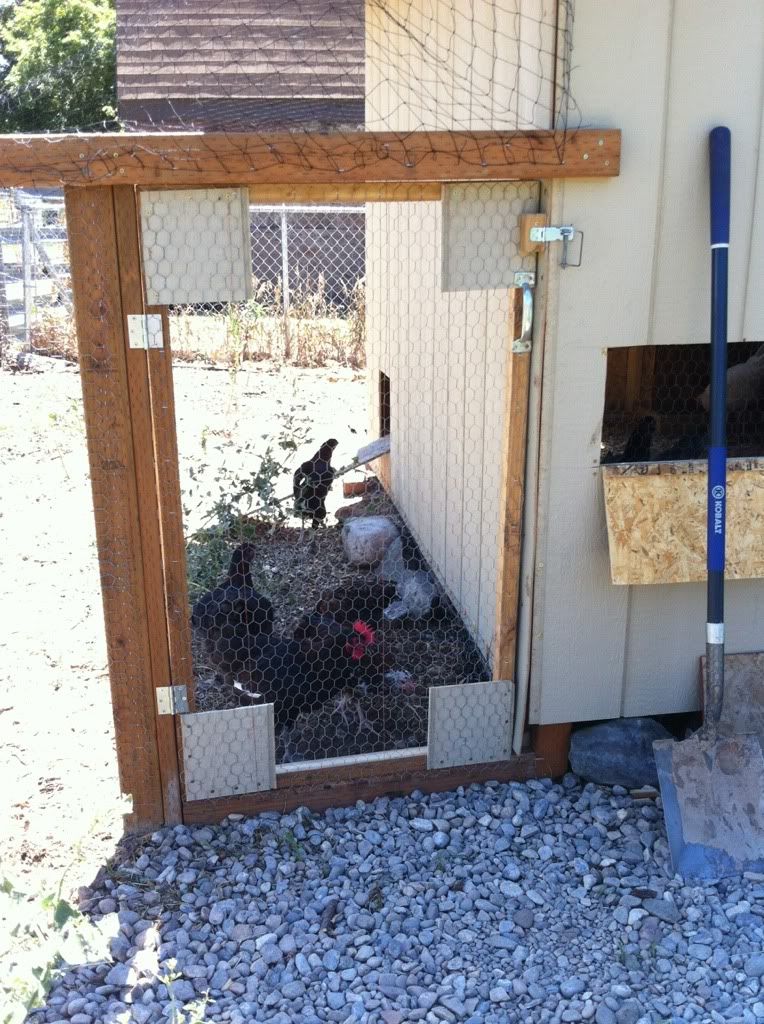
Here's the door to the enclosure:


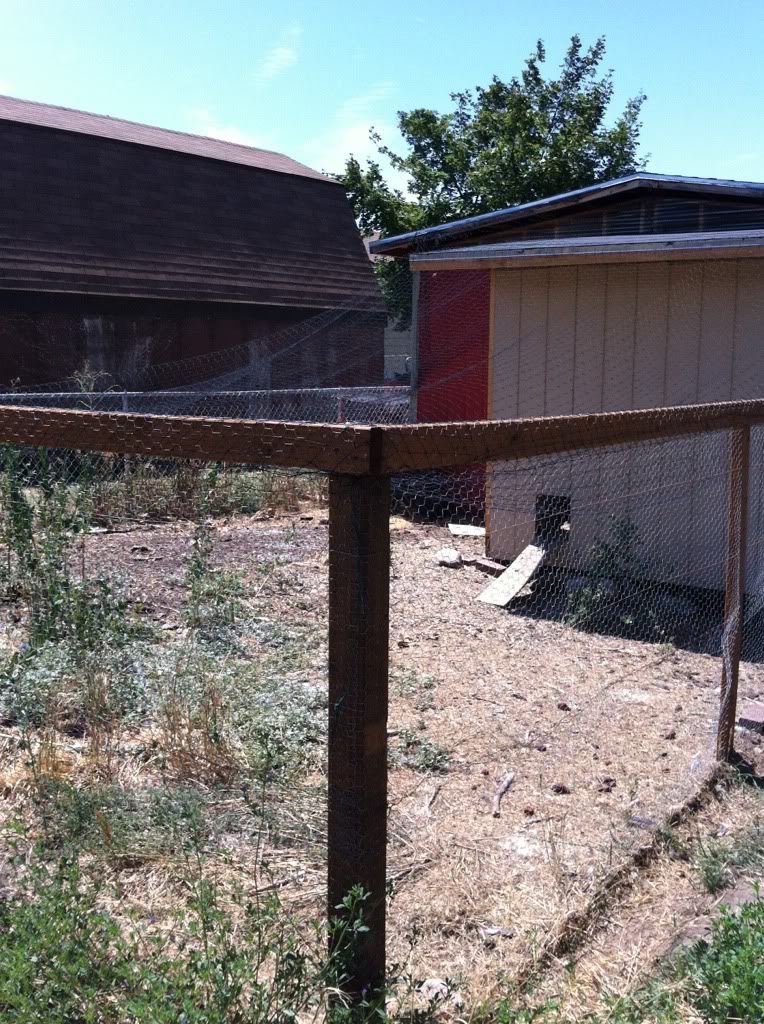
16x-20x enclosure.  The sides are a strong guaged chicken wire.  When building it, we used pressure treated lumber so it would withstand the elements a bit better. We also dug a trench a foot deep around the enclosure and buried the chicken wire so that digging under would prove more difficult.


The top of the enclosure is a bird netting that I bought on Amazon.  We wove it through the chicken wire and stapled it on really well to the posts around the enclosure and the roof of the chicken coop with NO gaps so that it could support some weight. It is a little loose though, so if something did try to think about crawling on top, it would be more like a hammock or safety net, so extremely UNATTRACTIVE to walk on. I've read that raccoons don't like unsteady surfaces, so I'm hoping that be having a floppy, soft, sinking surface, they won't  try to climb on top. It's secure enough that I'm sure it could take a medium to large size dog. Said animal would be hopelessly ensnared, but the chickens ought to be safe.

Friday, June 1, 2012

Ms. C's final hatch report

When I went in Wednesday morning, I was pretty sure that the hatch was done- I'd figured Chloe hadn't made it.  I was surprised to see her little beak moving around the pip hole when I got there, and I got my hopes up again. I waited all day for Chloe, the Coronation Sussex to hatch. By 6pm, I was very worried because the membrane was getting very stiff and dry, and it seemed like she wouldn't make it on her own. I helped her hatch, and had 3 or so drops of blood, which had me deeply, deeply upset and regretful.  I left her in the incubator overnight, hoping she'd be ok.

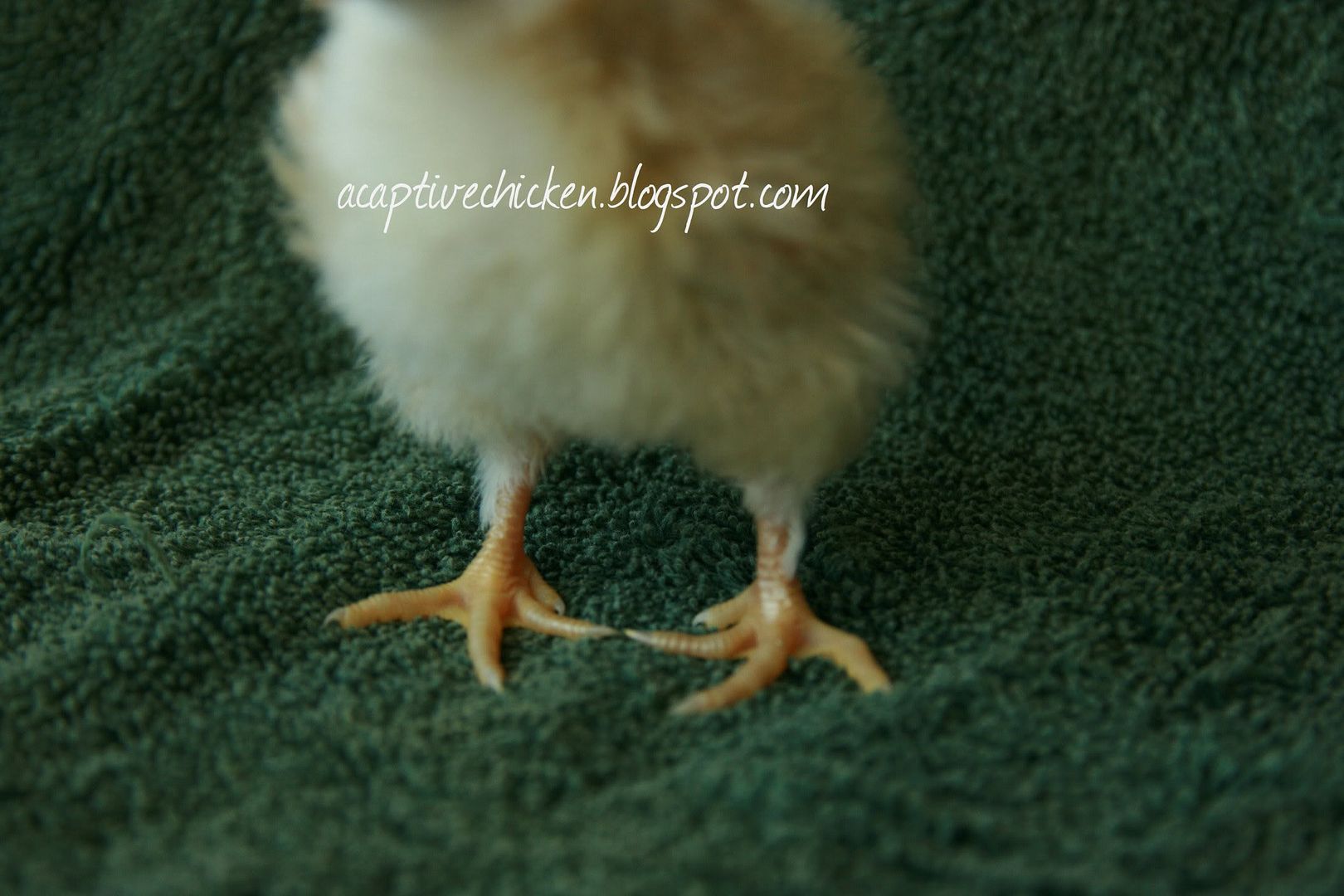
Thursday morning I came in, and she was still alive. She was crispy instead of fluffy, so I very carefully rinsed her off with warm water. That helped, but even after she was dry, she wasn't too fluffy. I used a toothbrush to very softly comb her off, and that made her fluff right up. I noticed her toes were a little curled, but I've seen that happen a few times, and they straightened out on their own. We're coming up on 48 hours old now, and they're not all better, so I'm starting to think I need to treat them. -sigh- That is a symptom of too long in the shell, so maybe I was right to help her out, even though I've been second guessing that. Here is her toes now.


And, to introduce the chicks.


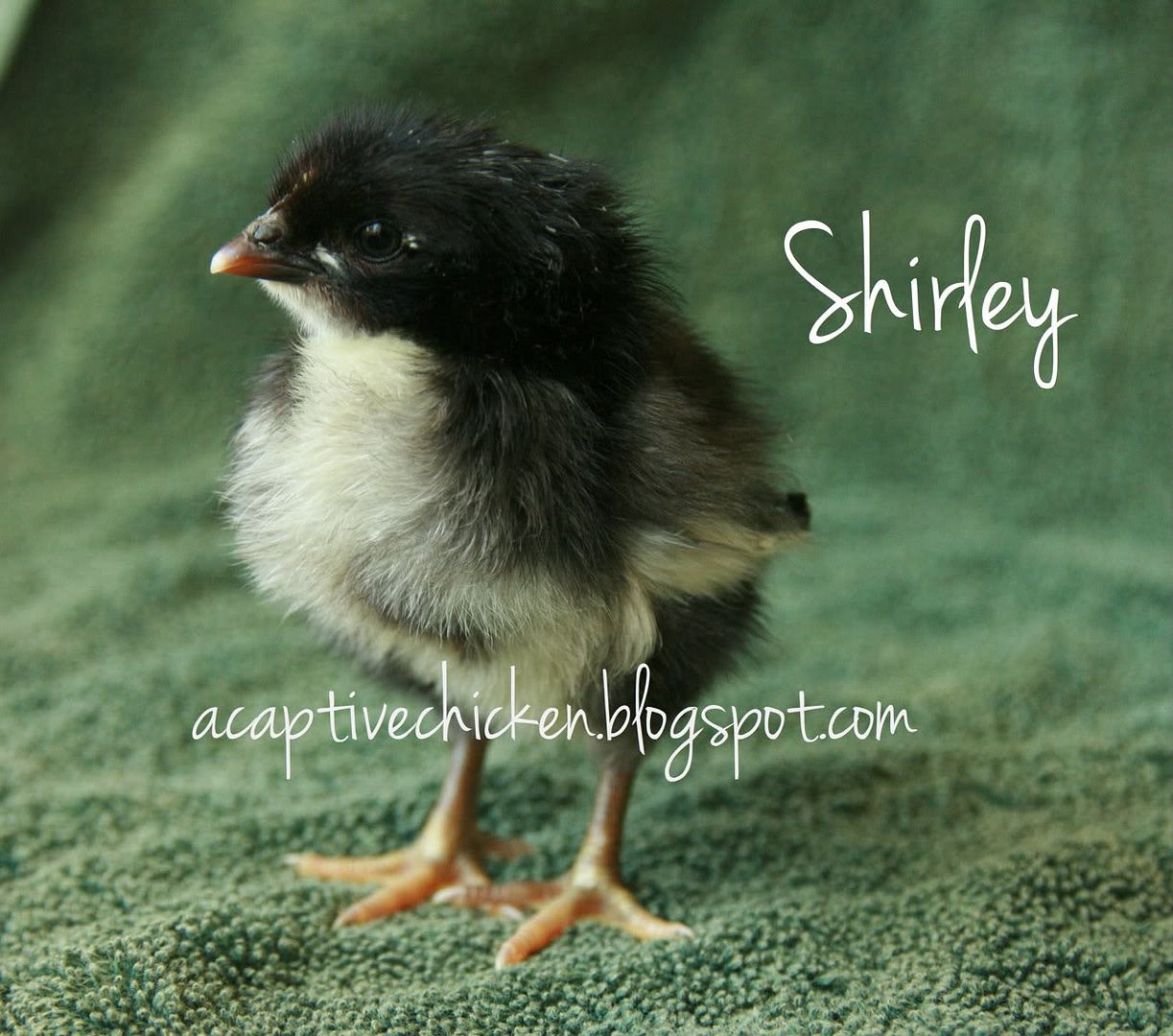
 First to hatch was Shirley, who came out of a medium brown egg. She/he looks like a black copper marans, except the legs are clean.


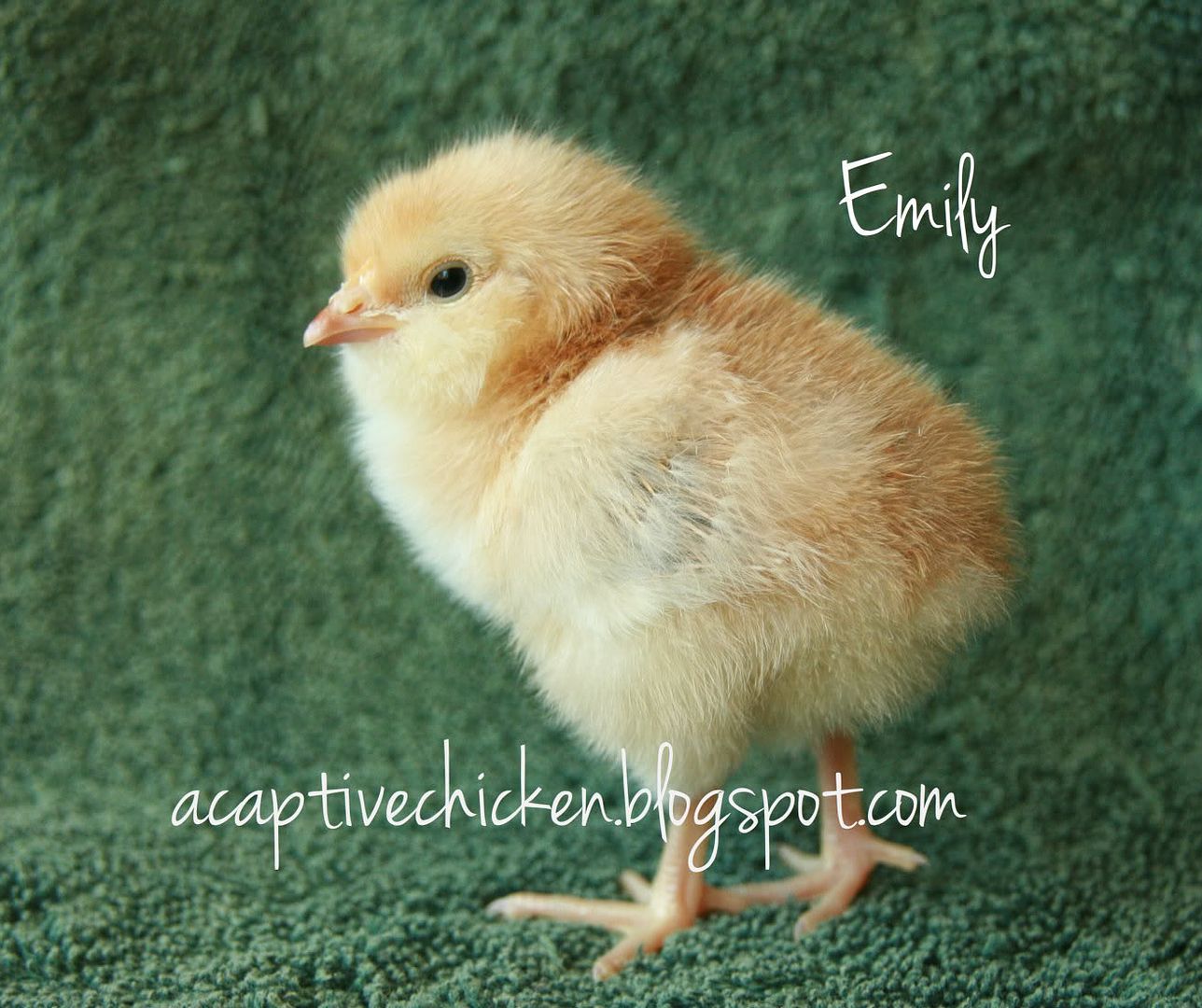
Next to hatch was Emily, who came out of a very dark olive egg. I wasn't able to see a thing in this egg, and had no idea if it was viable til she pipped.


Last, but not least is Chloe, a coronation sussex. She's the only purebred of the group.